Pallet Products
New, used, custom and heat-treated pallets for Delaware businesses, available through partner suppliers. Tell us what you need and we pass your request along.
Request a Free Quote
Fill out the form below and we will pass your request to a partner supplier, who will follow up.
Product Categories
Start with the type that fits your load and budget, then request a quote. Partner suppliers set prices, terms, delivery and warranties.
New Pallets
Unused wooden pallets from partner suppliers. A good fit when you want uniform construction, a clean appearance, or a pallet that has not carried another load. Ask for the size and design you need.
- Unused lumber
- Uniform construction
- Common sizes
- Clean appearance
- Stringer or block
- Priced by quote
Used Pallets
Pallets that have been in service and still have use left in them. Used pallets usually cost less than new ones, and reusing a pallet avoids building a new one. Partner suppliers sort them by condition.
- Sold by grade
- Sorted by condition
- Common sizes
- Reuse over new
- May show repairs
- Priced by quote
Custom Pallets
For loads that do not fit a standard pallet. Custom sizes are available through partner suppliers: describe your dimensions, load and handling in your request and a supplier can tell you what it can make.
- Non-standard sizes
- Stringer or block
- 2-way or 4-way entry
- Deck layout options
- Ask in your request
- Priced by quote
Heat Treated (ISPM 15)
ISPM 15 heat-treated pallets carry the IPPC mark and are used for many export shipments. Ask partner suppliers for what your shipment needs, and check current regulations for your destination.
- HT treatment code
- IPPC mark
- For export shipments
- 56 °C for 30 minutes
- Ask about paperwork
- Priced by quote
How Availability Works
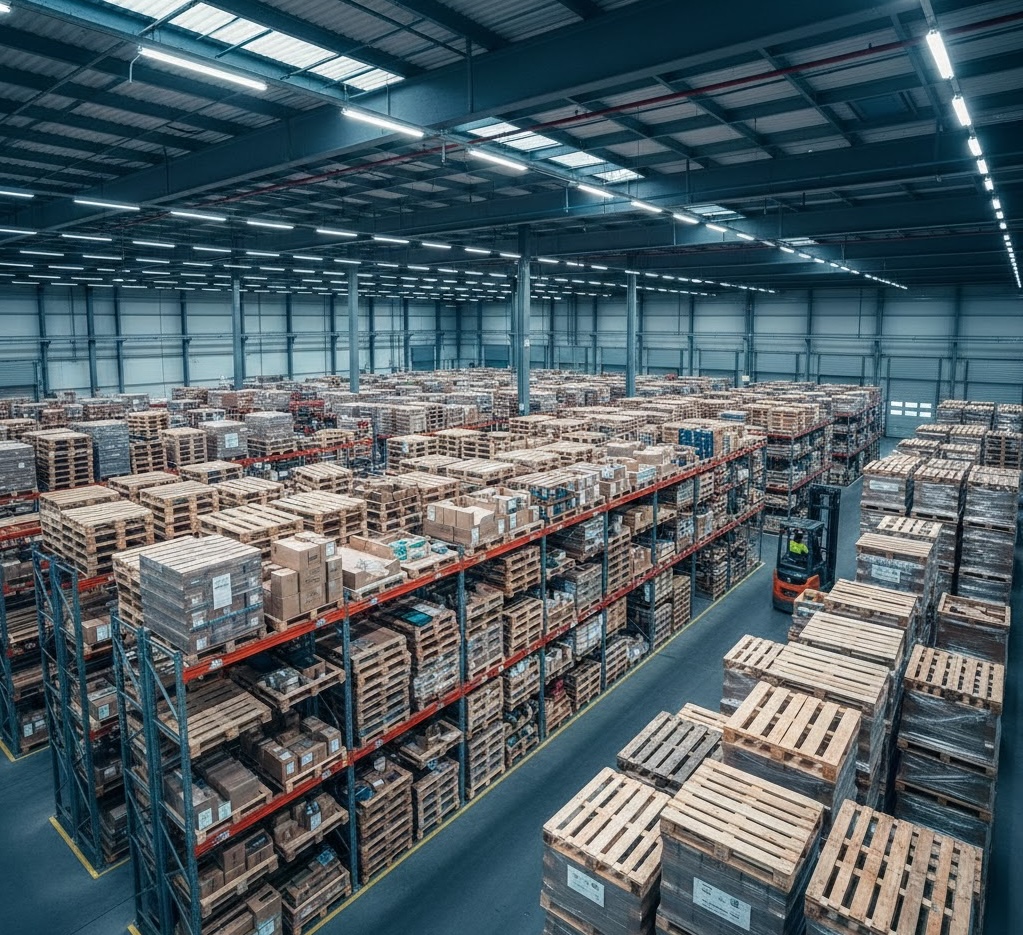
We are a referral service, so we don't keep pallets ourselves. What you can get depends on what partner suppliers have available when you ask, and on where in Delaware you need them.
- We pass your request to a supplier in our network
- A partner supplier follows up on size, grade and quantity
- Timing and delivery depend on the supplier
Popular Pallet Sizes
These are common pallet dimensions to ask for. Need a different size? Ask about custom pallets.
Construction Types
Knowing the difference between stringer and block construction helps you ask for the right pallet. Load ratings vary by design, so confirm them with the supplier.
Stringer Pallets
The most common type, using parallel boards (stringers) for support. Usually less costly than block pallets and easy to find in common sizes.
Advantages
- Usually lower cost
- Simple to repair
- Widely available
Considerations
- 2-way entry unless notched for partial 4-way
Block Pallets
Use blocks between the deck boards for support. Provides true 4-way entry, so a forklift or pallet jack can come in from any side. Often chosen for automated handling.
Advantages
- True 4-way entry
- Often stiffer
- Common in automated handling
Considerations
- Usually higher cost
- More involved repair
What the Grades Mean
Used pallets are usually sold as Grade A or Grade B. The grade describes condition and appearance, and it helps you match a pallet to the job.
Grades are trade terms, not a formal standard, so each supplier may draw the line a little differently. Ask what a grade means before you order.
Light wear, intact boards, tight fasteners and few or no visible repairs. Usually the cleanest used option and the closest to a new pallet in appearance.
Still functional, with more visible wear, darker wood and repairs such as added stringer plates or companion stringers. Usually the lower-cost used option.
What to Check on Delivery
- No broken or cracked boards
- No protruding nails
- Dimensions match your order
- Load rating confirmed with the supplier
- Clean enough for your product
- Stringers or blocks structurally sound
- Entry points clear for your equipment
- IPPC mark present, if you ordered heat-treated
Ready for a Quote?
Send a free, no-obligation quote request for new, used or custom pallets anywhere in Delaware. Pricing comes from partner suppliers, and availability depends on them.